
Sleep & Nutrition: The Hidden Connection You’ve Never Heard About

Nargis Akhter RDN | 09-28-2025

Timing matters. Eating late, even healthy foods can disrupt melatonin production and delay your body’s natural sleep rhythm. Time-restricted eating (TRE), where meals are consumed within a 9–10 hour window, may improve sleep quality by syncing your circadian rhythm.
Micronutrients matter. Tart cherry juice, kiwifruit, and leafy greens contain natural compounds that support melatonin and serotonin production—your sleep hormones. But it’s not just what you eat—it’s when and how consistently. sabotage. High-glycemic meals can spike insulin and disrupt nighttime cortisol, making it harder to fall asleep. Stable blood sugar = stable sleep.
Sleep loss changes your cravings. Even mild sleep deprivation increases appetite for high-fat, high-carb foods. Your brain seeks quick energy—but your body pays the price.

Melatonin is your body’s “sleep hormone.” It rises naturally in the evening to help you wind down. But eating too late can interfere with this process in a few key ways:
1. Digestion vs. Sleep Mode
When you eat, your body shifts into digestion mode, raising body temperature and activating metabolism.
Melatonin, on the other hand, signals your body to cool down and rest.
Late meals send mixed signals: “Should I digest or sleep?” This confusion can delay melatonin release
2. Circadian Rhythm Disruption
Your body has a central clock (in the brain) and peripheral clocks (in organs like the liver and gut).
Eating late can desynchronize these clocks, especially if meals happen during the “biological night” when melatonin is high.
This misalignment affects hormone balance, including melatonin and insulin.
3. Blood Sugar & Cortisol Interference
Late-night eating, especially sugary or high-carb foods can spike insulin and cortisol.
Cortisol is a wake-up hormone. If it rises when melatonin should be peaking, sleep gets disrupted.

1. Magnesium-Rich Foods
Support muscle relaxation and nervous system calm. Try pumpkin seeds, spinach, almonds, or a warm banana-almond smoothie.
2. Tart Cherry Juice
A natural source of melatonin and antioxidants. Sip 1–2 hours before bed to support sleep onset and duration.
3. Passionflower & Valerian Root
Herbal allies that promote GABA activity, easing anxiety and quieting the mind. Best used as teas or tinctures.
4. Glycine
An amino acid that lowers core body temperature and promotes deeper sleep. Found in bone broth or as a supplement.
5. Lavender & Essential Oils
Lavender, bergamot, and Roman chamomile oils can be diffused, applied to pulse points, or added to a warm bath. They help regulate heart rate and soothe the nervous system.
6. Kiwifruit
Rich in serotonin precursors and antioxidants. Eating 1–2 kiwis an hour before bed may improve sleep quality.
7. Evening Movement
Gentle yoga, stretching, or a short walk helps release tension and signal the body to wind down.
8. Digital Sunset
Reduce screen exposure 1–2 hours before bed. Blue light suppresses melatonin, so dim light switches to warm tones.
9. Guided Meditation
Mindfulness meditation, body scans, or spiritual reflections can calm racing thoughts and deepen parasympathetic activation. Try apps like Insight Timer or create your own audio series with Islamic affirmations and breathwork.
Bottom Line:
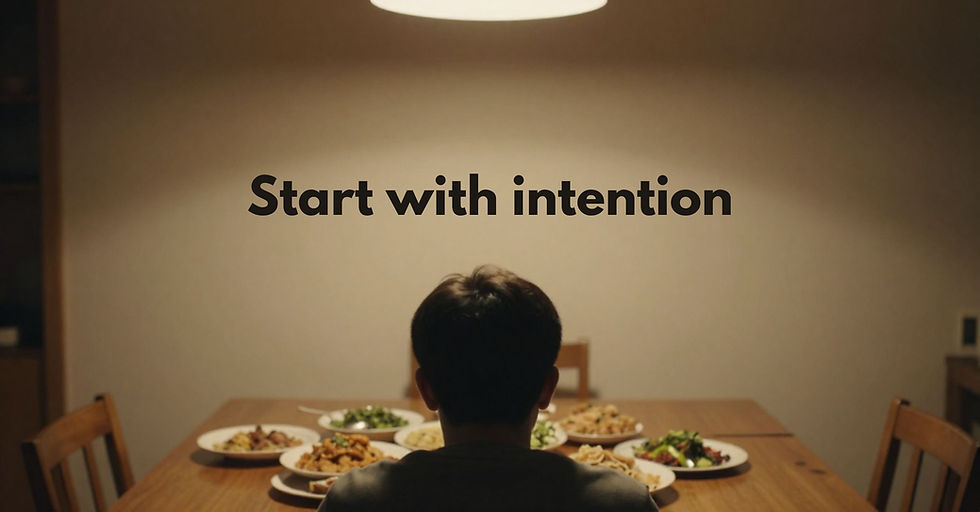
Eating earlier helps your body stay in sync. It allows melatonin to rise naturally, supports better sleep quality, and keeps your metabolic rhythm on track.
🖋️ Nargis Akhter, RDN
Founder of Nutritional Mindfulness™ | Creator of The Whole Health Mindful Café Helping you decode your symptoms, nourish your gut, and reclaim your clarity—one mindful bite at a time.
Want to decode your gut-brain signals?
Sign up for free discovery call https://p.bttr.to/2YXWXMP


Comments